
In every busy Indian city, parking tells a story long before a visitor steps inside your property. The story might begin with a smooth arrival, clear signage, and an easy way to pay. Or it might begin with confusion, congestion, and frustrated drivers circling for space.
For shopping centres, hospitals, office parks, residential complexes, and mixed-use developments, parking is no longer just a “support function”. It is part of the customer experience, part of your brand reputation, and part of your operational efficiency.
That’s where Pay & Display parking systems come in.
Across India, property owners are moving away from manual, cash-only, loosely monitored parking areas towards structured, transparent, and technology-led parking management. This guide explains what Pay & Display systems are, why they are growing in India, how they work, and why choosing the right partner—like Indus Parking Services—can make all the difference.
India’s cities are growing at a remarkable pace. According to government and urban mobility studies, urban vehicle ownership has increased several times over the past two decades, while road and parking infrastructure have not grown at the same rate. In major metros, drivers can spend 10–20 minutes on average just searching for a space in busy areas during peak hours.
This has real consequences for property owners:
At the same time, users are becoming more comfortable with digital payments. India has seen massive adoption of UPI and card-based transactions, with billions of digital payments processed every month. This shift creates a perfect opportunity to modernise parking operations with systems that are simple, transparent, and scalable.
Pay & Display fits right into this new reality.
A Pay & Display system allows drivers to:
For property owners, this creates a structured, easy-to-understand parking environment where:
In simple terms, it turns an open, loosely managed space into a managed parking asset.
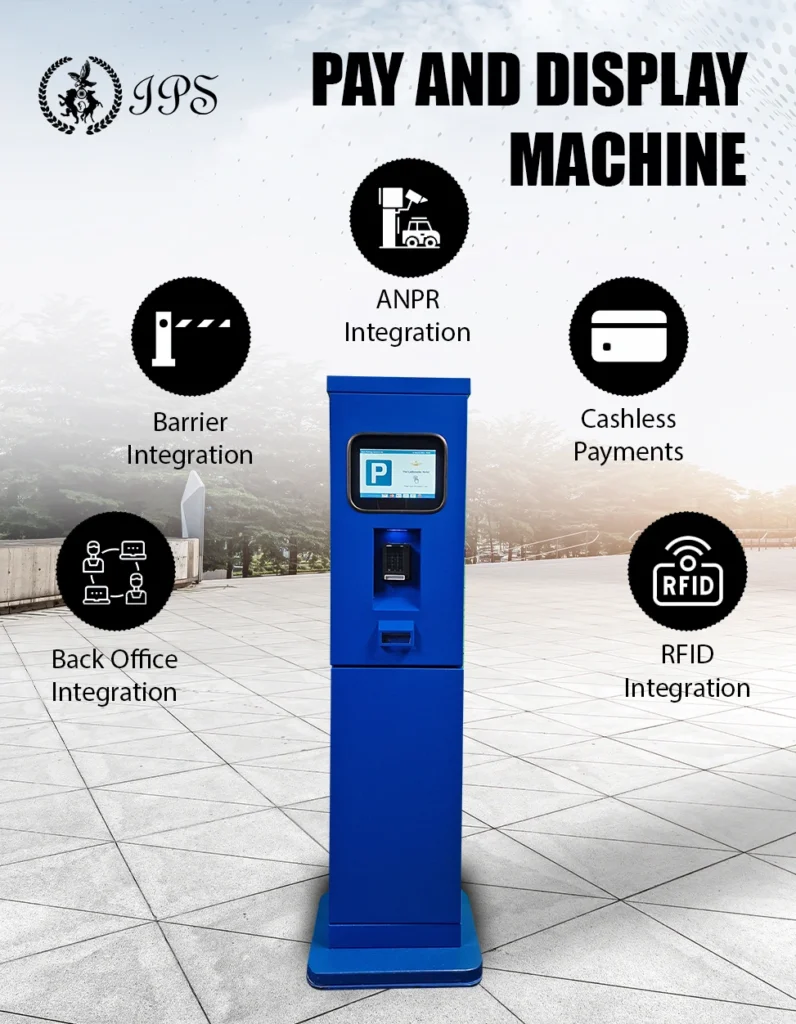
Imagine a busy commercial complex in a Tier-1 or Tier-2 Indian city.
Earlier, vehicles entered freely, payments were handled manually, and there was little visibility over who stayed how long. Staff spent more time resolving confusion than managing flow.
Now, with Pay & Display in place:
This structure doesn’t just improve order—it changes the entire rhythm of the site.
1. Better Space Turnover
When parking is time-based and clearly communicated, drivers are more likely to vacate spaces on time. This improves availability and helps more visitors access your property throughout the day.
In high-footfall locations like retail centres and hospitals, even a small improvement in turnover can translate into significantly better access and higher overall usage.
2. More Predictable Revenue
Instead of relying on manual collection or informal arrangements, Pay & Display creates a transparent, trackable payment flow. Every transaction is recorded. This helps property owners:
With digital payments growing rapidly in India, users also prefer quick, cashless options—making collections smoother and more reliable.
3. Improved User Experience
Parking is often the first and last touchpoint a visitor has with your property. A clean, well-marked, easy-to-use Pay & Display setup sends a clear message: this place is organised, modern, and customer-focused.
Clear instructions, simple pricing, and predictable processes reduce stress and confusion for drivers.
4. Operational Insights Through Data
Modern Pay & Display systems don’t just collect payments—they collect insights.
You can understand:
This data helps you make smarter decisions about staffing, layout changes, pricing strategies, and future expansion.
5. Scalable for Different Property Types
Whether you manage:
Pay & Display systems can be adapted to your specific needs, size, and visitor profile.
India is unique. You have:
A well-designed Pay & Display system fits perfectly into this environment. It supports:
And importantly, it brings consistency to places where parking was once handled in an ad-hoc way.
Not all systems—and not all service providers—are equal. When choosing a partner, property owners should look for:
1. Proven Experience in Indian Conditions
Indian sites come with unique challenges: weather, power reliability, usage intensity, and user behaviour. Your partner should understand this and design solutions that work on the ground, not just on paper.
2. End-to-End Service
The best partners don’t just install a machine and walk away. They handle:
3. Reliable Technology
Uptime matters. Payment machines, software systems, and reporting tools should be stable, secure, and easy to use—for both drivers and operators.
4. Clear Communication and Support
Your on-site team and your visitors should never feel confused about how the system works. Good signage, simple interfaces, and responsive support make a huge difference.
When it comes to Pay & Display solutions in India, Indus Parking Services stands out for a simple reason: they don’t just manage parking—they transform it into a well-run, data-driven operation.
Here’s what makes them an ideal partner:
1. Deep Understanding of Indian Parking Environments
Indus Parking Services has hands-on experience across commercial, residential, and mixed-use sites in India. They understand the realities of high traffic volumes, diverse user groups, and the need for systems that are both robust and user-friendly.
2. Tailored Pay & Display Solutions
No two sites are the same. Indus Parking Services designs Pay & Display setups based on:
This ensures you get a solution that fits your property—not a one-size-fits-all template.
3. Focus on User Experience
From clear signage to intuitive payment flows, Indus Parking Services places strong emphasis on making parking simple and stress-free for drivers. A smoother experience leads to better compliance, better turnover, and better perception of your property.
4. Strong Operational Support
Technology is only as good as the support behind it. Indus Parking Services provides ongoing monitoring, maintenance, and performance reviews—so your system keeps working day after day, not just on launch day.
5. Data-Driven Management
With modern reporting and usage insights, Indus Parking Services helps you understand how your parking is actually being used—and how it can be improved. This turns parking from a “cost centre” into a strategic asset.
Globally, well-managed parking is increasingly seen as part of asset optimisation. Studies in retail and commercial real estate consistently show that easier access and better parking flow directly support footfall and dwell time.
In the Indian context, where convenience is becoming a key differentiator, structured parking can:
Pay & Display is not just about collecting payments—it’s about bringing order, clarity, and professionalism to one of the most visible parts of your property.
Working with a specialist like Indus Parking Services typically involves:
The result is a parking operation that feels organised, modern, and easy to use—from day one.
India’s cities are only getting busier. The pressure on parking spaces will continue to grow. Property owners who act now—by adopting structured, transparent systems like Pay & Display—will be better positioned to offer smoother access, stronger operations, and a better overall experience.
With the right partner, parking stops being a daily headache and starts becoming a well-managed, value-adding part of your property.
If you’re looking to upgrade your parking operations with a reliable, user-focused, and future-ready Pay & Display solution, Indus Parking Services offers the expertise, technology, and support to make it happen—seamlessly.
