
It’s 6:45 pm in a busy Indian city. The sky is turning amber, the traffic is inching forward, and you’re heading to a popular high street for a quick errand. You finally spot a car park entrance—only to meet the real bottleneck: the payment moment.
One driver is searching for change. Another is waving at the attendant to “adjust” the amount. A third is stuck because the printer has run out of paper. Meanwhile, behind them, the queue grows—and the road outside starts to choke.
This is where the debate becomes very real for Indian cities:
Should car parks go fully cashless (UPI, QR, FASTag-like flows, apps), or keep ticket machines (print tickets, pay at a machine, exit)?
The best answer isn’t a one-size-fits-all. It depends on your city, your site type, your user mix, and how resilient you need operations to be.
Let’s break it down—practically, and from an operator’s point of view.
India has become one of the world’s biggest success stories in real-time digital payments. UPI has scaled to levels that are hard to ignore for any operator planning a modern parking experience.
At the same time, mobile usage is widespread—especially in urban areas—making scan-and-pay feel natural for many customers. A Government of India release (Comprehensive Modular Survey: Telecom, 2025) highlights very high mobile phone usage in urban India, and strong smartphone ownership among young adults. (Press Information Bureau)
So the “cashless” part is no longer the scary bit. The real question is: what payment setup reduces queues, prevents confusion, and keeps revenue tight—day after day?
Cashless parking is not just “use an app”. In India, it usually means one (or more) of these:
1) QR + UPI at entry/exit
A driver scans a QR, pays via UPI, and proceeds. This is popular because it matches everyday buying behaviour.
2) Attendant-assisted UPI
A staff member generates a QR or collects payment via UPI and confirms it in the system.
3) App-based payments
Users pay via an app (often used in campuses, tech parks, or frequent-visitor sites).
4) Online validations
For offices, hospitals, malls: validations can be issued digitally (tenant, visitor, patient, guest).
The strength of cashless in India is acceptance density. Reports show massive growth in QR adoption and merchant acceptance across the country. (DD News)
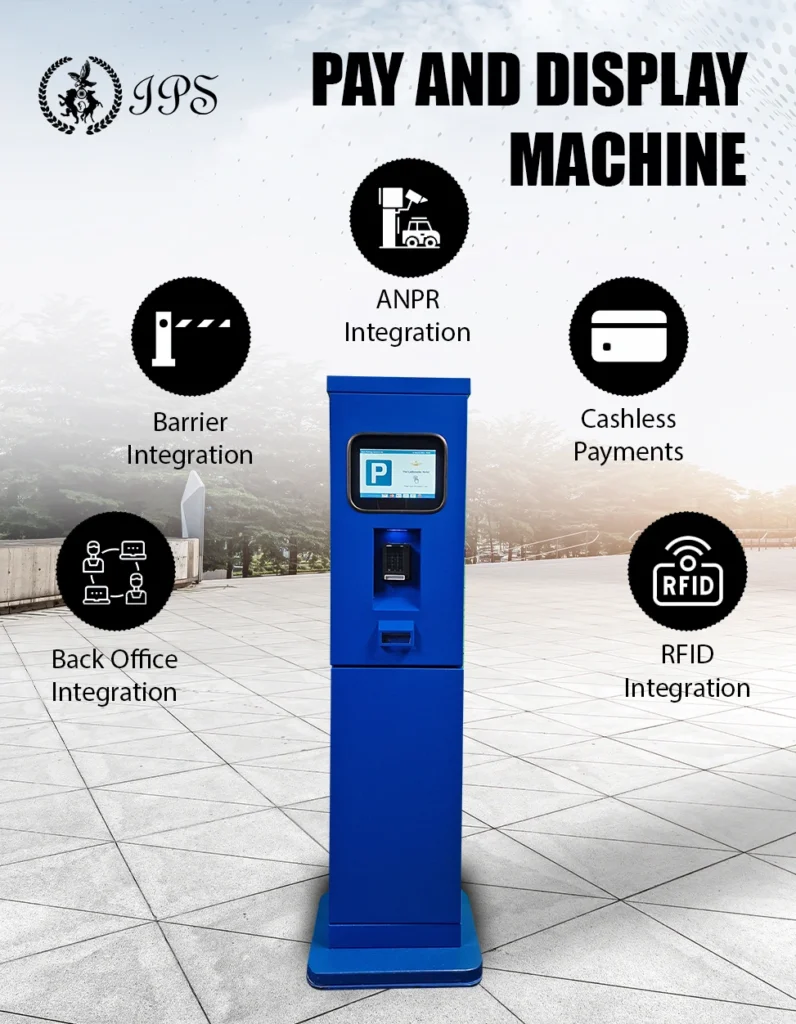
Ticket-machine systems (including pay-and-display or pay-on-foot styles) usually mean:
These setups are still relevant because they:
In some Indian sites—especially those with mixed demographics—ticket-based flows reduce confusion and arguments at the barrier.
Faster throughput during peak hours
If your car park experiences sharp peaks (malls, cinemas, business districts), cashless reduces time wasted at the payment point. Every second saved per vehicle becomes visible in the queue.
Lower operational friction
No paper rolls, fewer printer issues, fewer “machine is not working” moments.
Better transparency for operators
Digital records are easier to reconcile. With the right system, you can see:
Easier to expand across multiple sites
Once your digital flow is stable, scaling to a second, third, or fiftieth site becomes much easier—because training and reporting are standardised.
Matches real Indian payment behaviour
UPI volumes at a national level are enormous, and continuing to grow—making it the default payment habit for many users. (NPCI)
Network and device dependency
Even in cities, there are moments: weak signal pockets, payment app lag, or user phone issues. A system must be designed for resilience, not perfection.
Visitor mix (not everyone pays the same way)
Indian cities have a wide spectrum:
Customer support needs to be built-in
Cashless works brilliantly when the user journey is obvious. When it’s not, you’ll need:
Simple and familiar for mixed audiences
A ticket is visual, concrete, and easy to explain:
“Take ticket → pay → exit.”
This is helpful in hospitals, government-adjacent facilities, and older markets where user behaviour is highly varied.
Works as a “fallback” when digital flow fails
If UPI is slow one evening, a ticket machine flow can prevent complete stoppages. That operational certainty matters.
Good for sites with longer dwell times
In places where vehicles stay 2–6 hours (malls, offices), pay-on-foot ticketing can feel straightforward—especially when combined with validations.
Paper, printers, and maintenance
Ticket systems are physical systems. They need:
Queue risk if payment points are limited
If you have only one payment machine and 40 cars trying to exit after a movie, you’ll feel it immediately.
Harder to centralise insights (unless upgraded)
Basic ticket systems can become “operationally busy” but “data-light” unless the backend is modern.
The most reliable answer: a hybrid that’s designed on purpose
For most Indian city sites, the best-performing setup is:
Cashless-first + ticket-machine fallback, stitched together with a single reporting and reconciliation layer.
This approach delivers:
High-street retail / mixed commercial
Cashless-first is usually the best fit, with an assisted option for rush hours.
Hospitals
A hybrid is ideal: quick digital payments, plus a clear physical fallback for visitors under stress.
IT parks and corporate campuses
Cashless works extremely well when paired with:
Residential visitor parking
Hybrid again—especially where visitors vary widely and simplicity reduces disputes.
When you’re deciding between cashless and ticket machines, the bigger decision is actually this:
Who can run the system reliably across Indian conditions—peak loads, mixed user behaviour, site-by-site differences, and the daily reality of operations?
Indus Parking Services is an apt choice because we focus on outcomes, not just equipment:
1) Site-first design (not a one-template rollout)
We assess entry/exit points, peak flows, visitor patterns, and payment behaviour—then recommend the right mix: cashless-first, ticket-first, or hybrid.
2) Indian payment alignment (UPI-friendly journeys)
With UPI operating at massive scale nationally, a well-designed cashless flow is now a practical advantage—when implemented with strong on-ground clarity. (NPCI)
3) Operational resilience
Our approach prioritises continuity: signage, staff guidance, exception handling, and clear SOPs—so the site keeps moving even when conditions aren’t perfect.
4) Reporting that owners can act on
Whether your site is cashless, ticket-based, or hybrid, we focus on consistent reporting that helps you:
5) Scalable management across multiple sites
For city operators managing multiple car parks, consistency is everything. Standardised reporting, training, and rollout playbooks make expansion smoother.
Indian cities are moving fast. Payments are digital-first, but behaviour is mixed. The best parking payment model is the one that:
For most Indian urban sites, that means cashless-first, backed by a simple physical fallback, delivered through a single, well-managed system.
Cashless parking is no longer “future tech” in India—it’s becoming the default expectation in many places. Ticket machines still have a role, especially where audiences are diverse and operational certainty matters.
The smartest move for Indian cities is to stop treating this as a binary choice.
Build a system that moves vehicles smoothly, supports real users, and gives owners the data to improve the site month after month.
And if you want that system to run reliably—not just launch smoothly—Indus Parking Services can design, implement, and operate the right model for your city and your site.
