
Digital payments have transformed how people pay for everyday services. From buying groceries to paying for transport, a quick scan of a QR code is often all it takes. In India, the rise of Unified Payments Interface (UPI) has completely reshaped the payment landscape.
Today, UPI dominates India’s digital transactions, accounting for more than 83% of all digital payments and processing over 185 billion transactions annually.
With such massive adoption, it’s easy to assume that traditional payment systems—such as parking payment machines—are becoming obsolete. But the reality is far more nuanced.
Even in an era of instant mobile payments, parking payment machines remain essential infrastructure, especially for structured environments such as shopping centres, hospitals, retail parks, and commercial sites.
For companies like Indus Parking Services Pvt. Ltd., the key is not choosing between digital payments and machines—it’s about integrating both to deliver reliable, flexible, and user-friendly parking experiences.
A Payment Revolution
UPI has become one of the fastest-growing payment systems in the world. It allows users to transfer money instantly between bank accounts through mobile apps, removing the need for cash or cards.
Some key statistics highlight its scale:
These figures clearly show that mobile payments are shaping the future of transactions. But when it comes to parking management, convenience alone isn’t the only factor.
Reliability, accessibility, and operational control also matter—and this is where parking payment machines still play a critical role.
Parking is not like other retail transactions. When someone parks a vehicle, the process involves time tracking, location-based pricing, and structured payment flow. Unlike quick retail purchases, parking systems must handle:
Because of this, dedicated parking payment infrastructure remains essential, even in the digital era.
1. Not Every Driver Uses UPI
Although digital payments are growing rapidly, not all drivers rely on mobile apps for transactions.
Some drivers may:
Parking sites serve a diverse group of users, including tourists, elderly visitors, and occasional drivers. Payment machines ensure that everyone has a reliable way to pay, regardless of their preferred payment method.
2. Connectivity Can Be Unreliable
UPI transactions require:
However, many parking locations—such as basements, underground car parks, rural sites, or large multi-storey structures—often have weak signal coverage.
In such cases, parking payment machines act as a dependable fallback, ensuring that payments can still be processed without frustration.
For site operators, this reliability is essential to maintain smooth parking operations.
3. Structured Payment Flow Reduces Confusion
Parking payment machines guide drivers through a clear step-by-step process:
This structured interaction reduces confusion for first-time visitors.
Mobile payments, on the other hand, may require:
For many drivers—especially those visiting a site for the first time—a simple on-site machine is faster and more intuitive.
4. Faster Processing During Peak Hours
Busy sites such as:
can experience hundreds of vehicles arriving within a short period. Parking payment machines allow multiple users to pay simultaneously, preventing bottlenecks.
Relying only on mobile payments can slow down the process, particularly when users struggle with network issues or unfamiliar apps.
Machines provide a predictable, efficient payment flow during busy periods.
5. Better Integration With Parking Technology
Modern parking payment machines are no longer simple coin boxes.
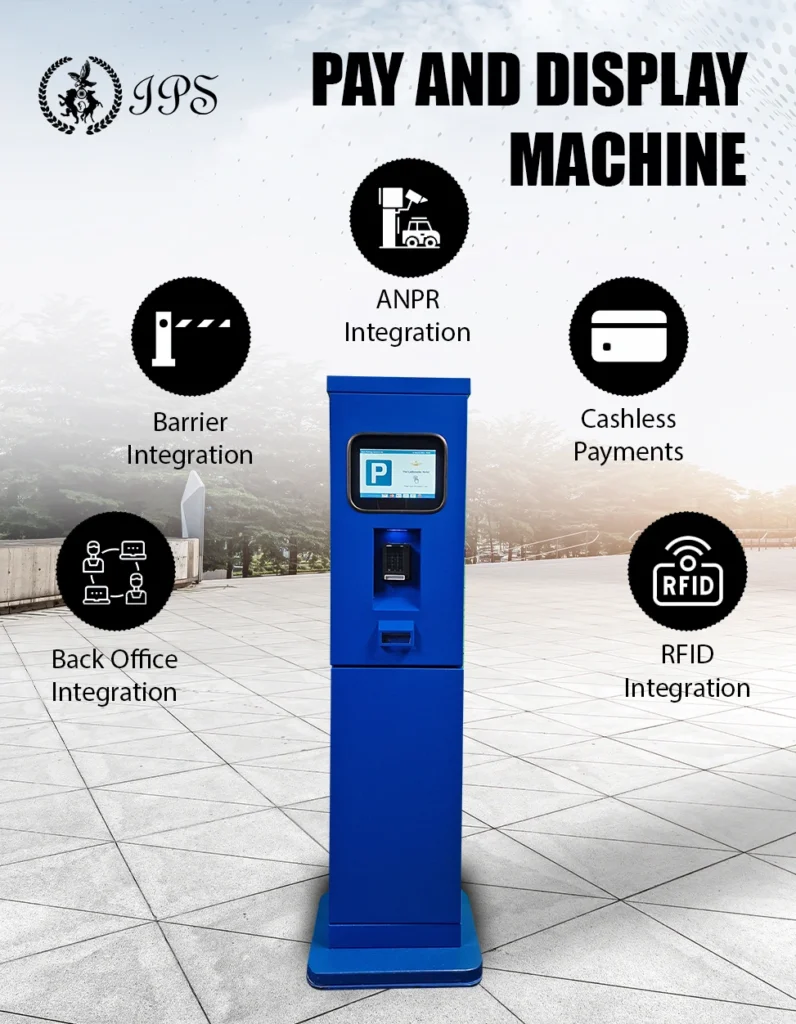
They integrate seamlessly with advanced parking technologies such as:
This integration allows operators to:
Mobile payments alone cannot provide this level of structured operational control.
Smart Parking Payment Machines
The parking payment machines offered by Indus Parking Services Pvt. Ltd. are designed for modern parking environments.
Instead of relying on a single payment method, they support multiple payment options, including:
This hybrid approach ensures that drivers can choose the method they prefer.
Enhancing the Parking Experience
For drivers, the benefits include:
For site owners and operators, the advantages include:
In other words, parking payment machines complement digital payments rather than competing with them.
Hybrid Systems Are the Future
The future of parking payments will not be about choosing between machines or digital payments. Instead, successful parking environments will combine:
This integrated model ensures that every driver can pay easily, regardless of their preferred payment method.
For operators managing busy car parks, payment machines provide several long-term benefits:
Operational Reliability
Machines provide consistent service even when mobile networks fail.
Inclusive Access
They ensure that drivers without smartphones or apps can still pay easily.
Controlled Parking Environment
Machines integrate with parking management systems, enabling better monitoring and site management.
Professional User Experience
A dedicated payment point signals an organised and well-managed parking facility.
Digital payments such as Unified Payments Interface (UPI) have undoubtedly transformed the way people pay for services. Their speed, convenience, and accessibility have made them a central part of modern financial ecosystems.
But parking environments require more than just quick payments. They demand reliability, accessibility, operational structure, and flexibility. That’s why parking payment machines remain an essential part of modern parking infrastructure.
For forward-thinking operators, the goal is not to replace machines with digital payments—but to integrate both into a seamless parking experience.
By combining advanced technology with user-friendly payment systems, Indus Parking Services continues to provide solutions that support modern drivers while ensuring efficient, well-managed parking environments.
