Commercial properties are often judged long before a visitor steps inside the building. The parking experience shapes the first impression, influences daily convenience for tenants, and directly affects the perceived professionalism of the property.
Welldone Tech Park, a busy multi-tenant office complex, faced a growing operational challenge. While the building itself functioned efficiently, the parking area had become a point of frustration for occupants and management alike. The absence of structured parking control meant the facility was operating more like an open public space than a managed corporate asset.
To restore order and accountability, the property owner appointed Indus Parking Services, a specialised parking management company in India, to redesign and operate the entire parking ecosystem.
Over time, informal practices had gradually taken over the parking area. External visitors were able to park simply by paying cash to local attendants. Because no access verification existed, the difference between authorised users and outsiders became meaningless. Employees who arrived for work often found their allocated spaces occupied.
This did more than inconvenience drivers. It reduced confidence in the building’s management and began affecting tenant satisfaction. For office occupants, reliable parking is part of the workplace infrastructure, not an optional amenity.
Financial accountability was also absent. Payments were collected manually and inconsistently, leaving no audit trail. The site owner had no reliable way to determine revenue potential or detect leakages. Parking, which should have been a structured facility service, had turned into an unrecorded activity.
The environment also lacked professionalism. Attendants wore no uniforms and could not be easily identified, making visitors uncertain about whom to approach. Without visible authority, instructions were frequently ignored.
The absence of signage compounded the confusion. Drivers did not know where to park, what charges applied, or which areas were restricted. This resulted in arguments, blocked driveways, and inefficient circulation.
Security concerns naturally followed. With no vehicle tracking or surveillance, incidents of minor damage could not be investigated. The lack of accountability eroded trust in the premises.
By the time Indus Parking Services conducted its site audit, the issue was not simply parking congestion — it was an operational, financial, and reputational problem.
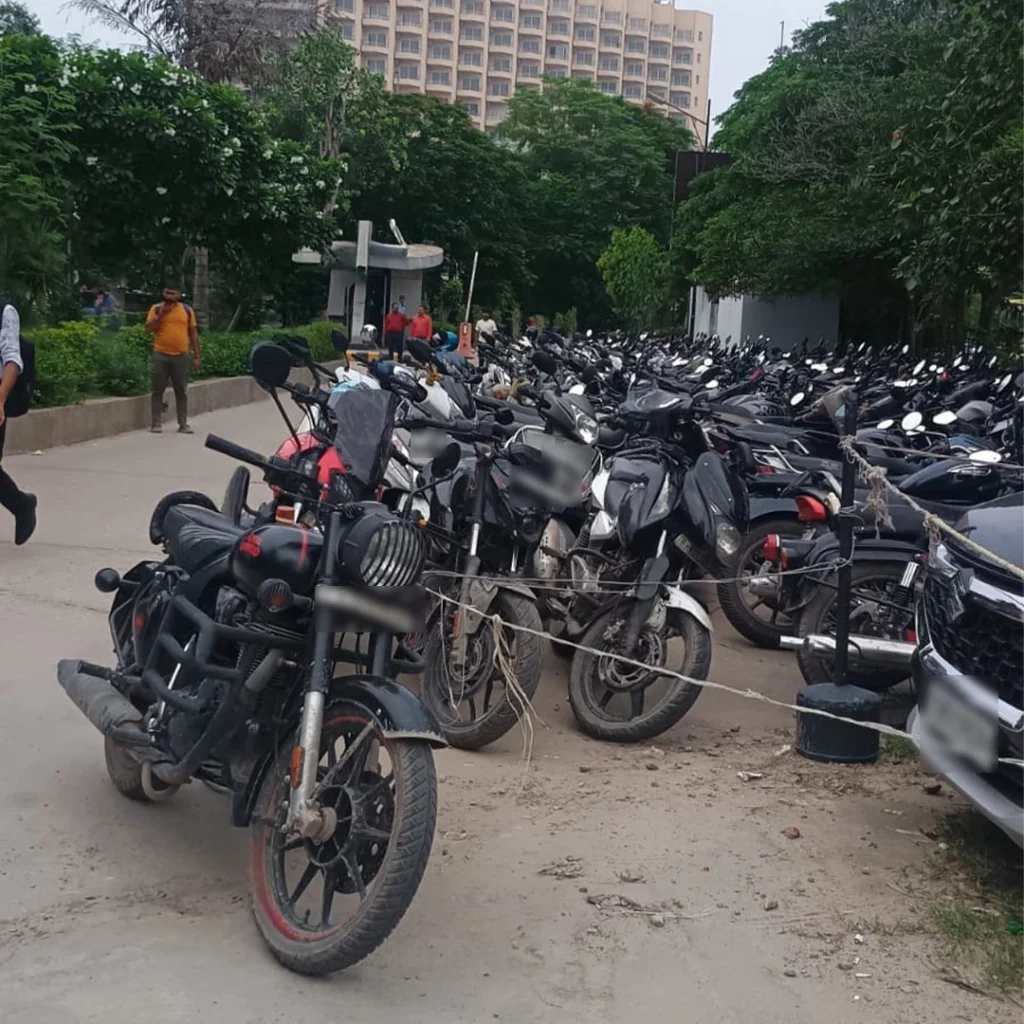
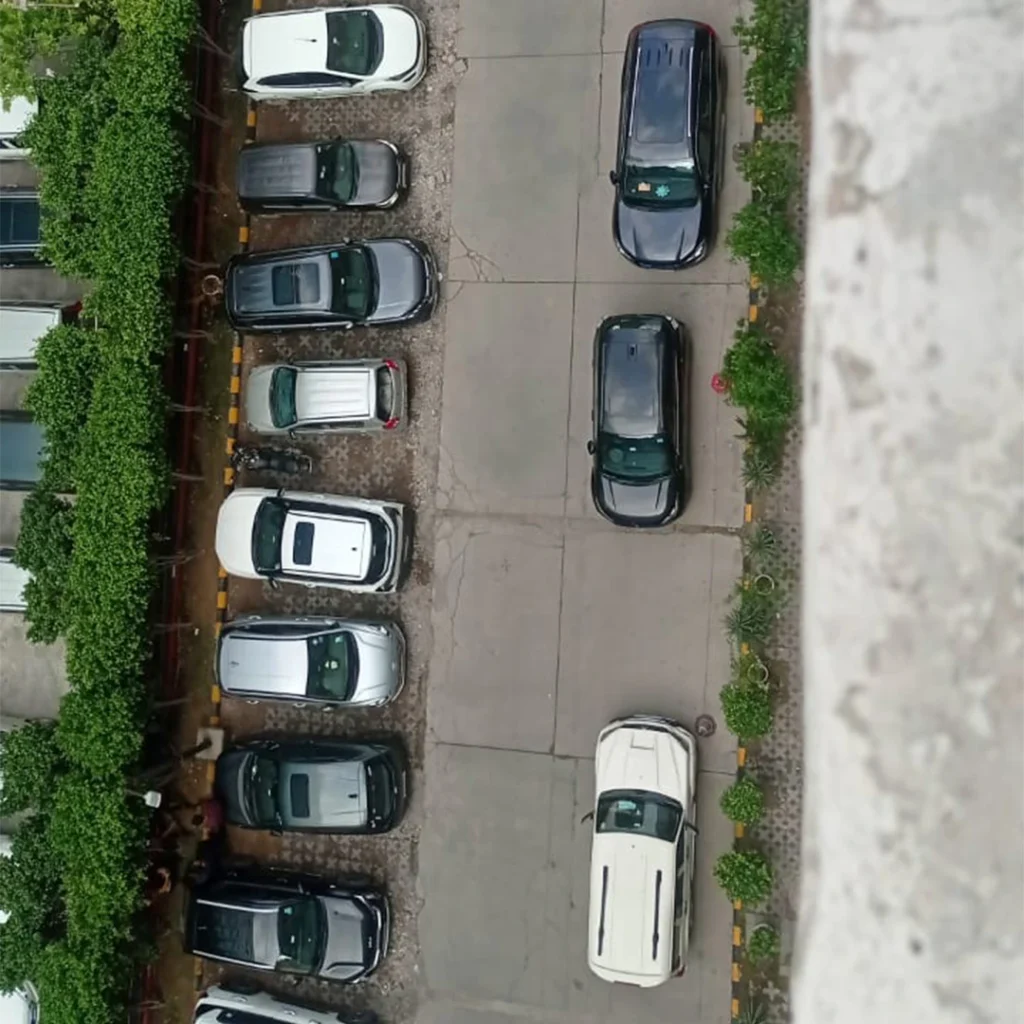
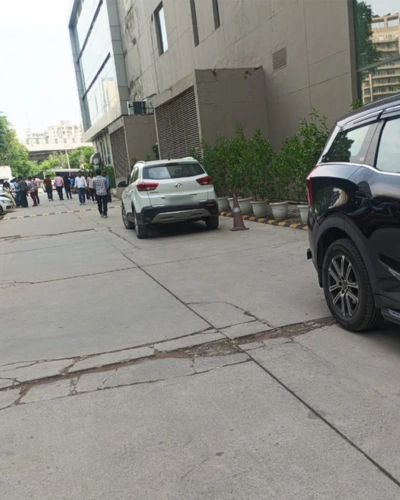
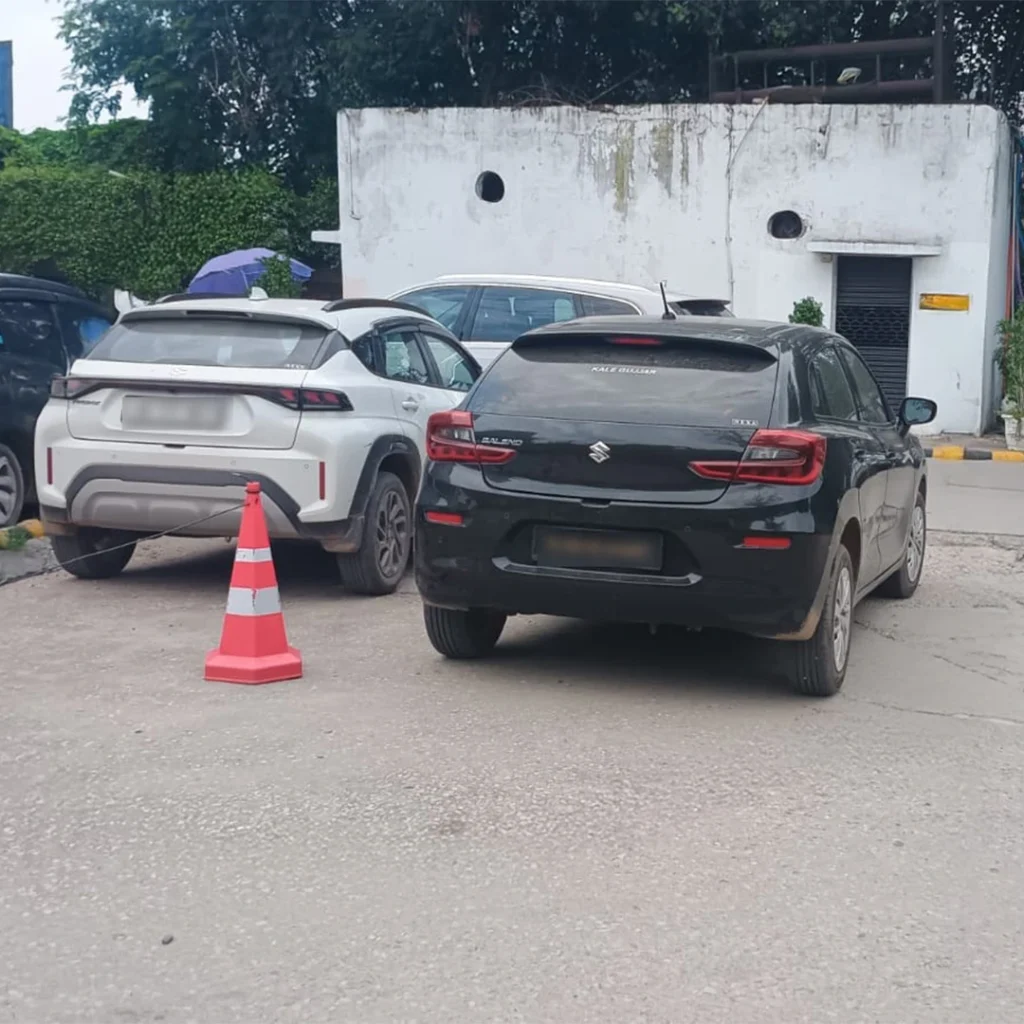
Rather than addressing individual symptoms, Indus Parking Services approached the project as a full parking infrastructure redesign. The objective was to transform the area into a controlled, transparent, and predictable facility aligned with corporate standards.
The strategy combined technology, manpower, communication, and physical layout improvements so that users would naturally follow correct behaviour instead of being forced into compliance.
Automatic Number Plate Recognition cameras were installed at entry and exit points, creating a digital identity for every vehicle entering the premises.
By recording entry and exit times, the system differentiated authorised tenants from visitors and prevented misuse of reserved spaces. Once drivers understood that access was recorded automatically, unauthorised parking declined without confrontation.
The entrance effectively changed from a guarded gate to a controlled checkpoint, and verification became faster than manual checks.
Uniformed parking attendants replaced informal operators. The presence of clearly identifiable staff increased compliance because drivers respond more readily to recognised authority.
Training ensured attendants could guide vehicles efficiently, manage peak-hour movement, and assist visitors politely. The role shifted from fee collection to facility management, changing the tone of interactions across the premises.
Handheld ticketing machines generated time-stamped digital receipts, eliminating disputes over charges and reassuring users that the process was legitimate. Valet assistance further reduced congestion at the entrance during busy periods.
Once transactions were digitised, daily reports could be generated automatically. The property owner could now understand utilisation patterns and verify collections.
When parking became measurable, it became manageable. Revenue leakage was reduced and the parking facility evolved into a predictable operational asset.
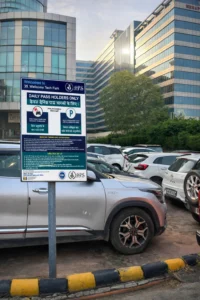
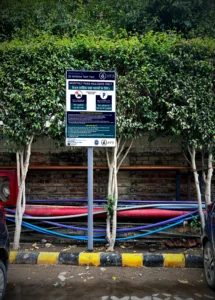
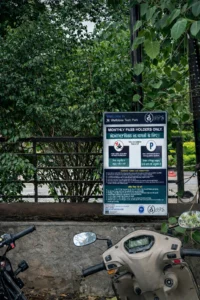
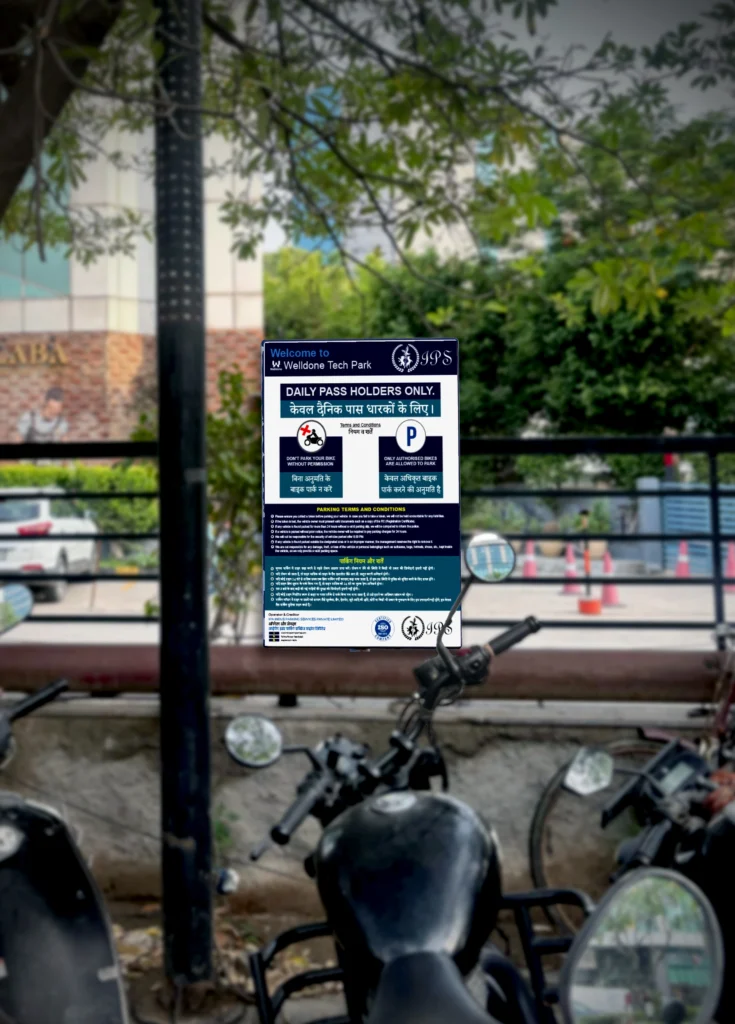
Directional signage and tariff boards were installed across the site. Visual instructions allowed drivers to make quick decisions without hesitation, reducing incorrect parking behaviour.
No-parking indicators and terms-and-conditions boards established visible rules, reducing arguments and dependence on verbal enforcement.
Parking spaces and circulation paths were reorganised to guide vehicles logically through the premises. Drivers spent less time searching and less time obstructing others, which improved traffic movement throughout the complex.
Within a short operational period, measurable improvements were observed across operations, user satisfaction, and revenue performance.
Tenant parking availability increased significantly, with approximately 85–90% of reserved users consistently finding a space on first arrival, compared to less than 50% earlier. As a result, parking-related complaints reduced by an estimated 70% within the first three months.
Entry and exit times improved due to automated verification and organised flow. Average entry time during peak hours dropped from roughly 4–5 minutes to under 90 seconds, improving daily commute efficiency for occupants.
Because transactions were recorded digitally, revenue visibility improved immediately. The site owner observed an estimated 30–40% increase in accountable parking revenue, largely due to the elimination of informal collections and unauthorised usage.
Security perception improved as well. Reported vehicle damage complaints decreased by approximately 60%, primarily because vehicles were parked correctly and movement inside the premises became controlled.
Visitors also reported a noticeably better experience. Informal feedback surveys indicated over 80% user satisfaction with parking operations after implementation, compared to frequent dissatisfaction previously.
The improvements extended beyond operational convenience and began influencing the property’s commercial value.
Tenant retention strengthened as daily usability improved. The management reported a reduction in parking-related escalation emails by nearly 75%, freeing administrative staff to focus on other facility matters.
Better space utilisation allowed the property to manage capacity more effectively. Peak-hour congestion reduced by an estimated 50%, enabling smoother traffic flow and safer pedestrian movement.
Financially, the parking area transitioned from an uncertain activity into a predictable asset. Monthly parking revenue stabilised and became forecastable, improving budgeting accuracy for the property.
The professional appearance of the facility also enhanced visitor perception. Leasing enquiries reportedly increased after operational improvements, suggesting that organised infrastructure contributed to overall property attractiveness.
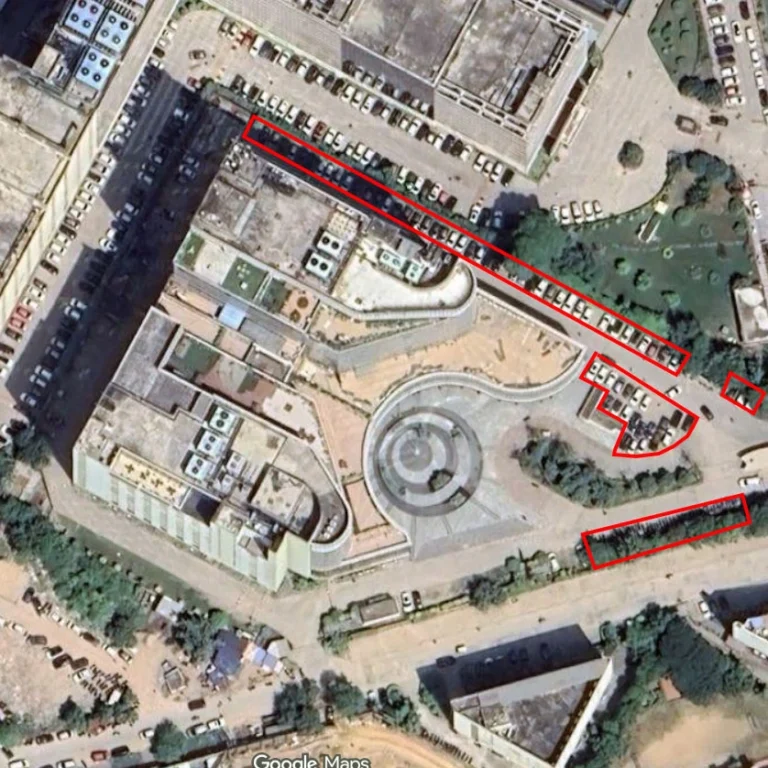
Through the integration of ANPR technology, trained manpower, structured accounting, and clear communication systems, Indus Parking Services converted an unregulated parking area into a professionally operated facility.
The Welldone Tech Park project demonstrates how a modern parking management company in India can enhance security, transparency, and tenant satisfaction while improving the commercial value of a property.
Parking is often the first interaction a visitor has with a building. At Welldone Tech Park, it is now a controlled, efficient, and reliable experience — aligned with the standards of a contemporary corporate environment.
